
SQLITE NOT INSTALLED
Finding an old coin scanner in a drawer or at the bottom of a box can be a small jolt of excitement. The question that follows is simple and urgent: is it junk — or something worth serious attention? This guide walks you through how coin values are determined, how to identify and authenticate pieces, where to look for reliable price information, and practical steps to get the best outcome if you decide to sell or preserve your coins.
What actually gives a coin value?
Value is never a single factor. A coin’s worth is the outcome of metal content, rarity, condition, historical interest, and demand among collectors. Some coins are valuable because they contain bullion; others are valuable because only a handful survive or they show an unusual die error. Still others have value due to a famous provenance or association with a historical event.
Think of value as the conversation between supply and desire: how many of these exist, and how badly do people want them? That conversation is influenced by time — tastes change, markets ebb and flow, and a coin that was ordinary a decade ago might be highly sought today.
The primary factors that matter
Here are the main elements that buyers and experts weigh when valuing a coin. Each paragraph describes one factor so you get a clear picture.
- Metal and face value — Bullion coins or older coins with high precious‑metal content have minimum value tied to the metal, though numismatic interest can push the price higher.
- Rarity and mintage — Low mintage or low survival rates usually increase value. A common date in worn condition might be worthless to collectors if millions exist; a scarce date, even in lower condition, can be worth a lot.
- Condition (grade) — Two identical coins can differ dramatically in price if one is crisp and another badly worn. Grading is a nuanced practice; small differences in detail can mean large differences in price.
- Historical or aesthetic appeal — Coins tied to historical events or with particularly attractive designs, toning, or patinas attract more collector interest.
- Errors and varieties — Misstrikes, doubled dies, and minting anomalies are collectible if they are genuine and documented.
Condition and grading: the language of value
Grading translates the subjective notion of “how good” a coin is into a scale collectors and dealers use to set expectations. The most widely used scale for modern and many older coins is the Sheldon scale, running from 1 (poor) to 70 (perfect). A coin’s grade affects its marketability and price dramatically.
Grading is part science, part art. Experienced graders look at strike quality, surface preservation, luster, contact marks, and eye appeal. Small marks in key locations can lower the grade, while exceptional surfaces or full mint luster can raise demand even at the same numerical grade.
Sheldon grading scale — quick reference table
| Grade | Descriptor | What to expect |
|---|---|---|
| 70 | Perfect Mint State (MS) | Perfect under magnification; virtually no imperfections; highest prices for a given issue. |
| 60–69 | Mint State (MS) | No wear; varying degrees of marks and luster; prices fall as the number decreases. |
| 40–58 | About Uncirculated (AU) | Very slight wear on high points but attractive overall. |
| 20–35 | Extremely Fine to Very Fine (EF/VF) | Moderate to light wear with most details visible. |
| 4–12 | Very Good to Good (VG/G) | Heavy wear; major design elements visible but flattened. |
| 1–3 | Poor to Fair (P/F) | Severely worn; date and major features may be barely visible. |
For valuable coins, consider third‑party grading and encapsulation by reputable services like PCGS (Professional Coin Grading Service), NGC (Numismatic Guaranty Corporation), or ANACS. These services add credibility and make selling easier, though there are costs and deadlines to consider.
Home grading — what you can do right now
You can get a useful sense of condition without elaborate tools. Use a 10x loupe, good light, and a soft white background. Look for heavy wear on the highest points of the design, check for hairlines or scratches, and note whether the coin still has luster or shows a glassy sheen.
Record what you see. Photograph the obverse and reverse, and take a close‑up of the date and mint mark. This information will be invaluable whether you consult price guides, post online, or visit a dealer.
Identify your coin: step one in checking value
Accurate identification is the foundation of any valuation. Mistaking a foreign coin for a U.S. coin, or missing a mint mark, leads to false conclusions. Identification includes determining the country, denomination, date, mint mark, and any variety or error.
Start with the basics: the obverse (front), the reverse (back), the edge, and any inscriptions. Many modern coins have mint marks near the date; older pieces may show them in less obvious places. Compare your coin to good reference photos in catalogs or reputable online databases.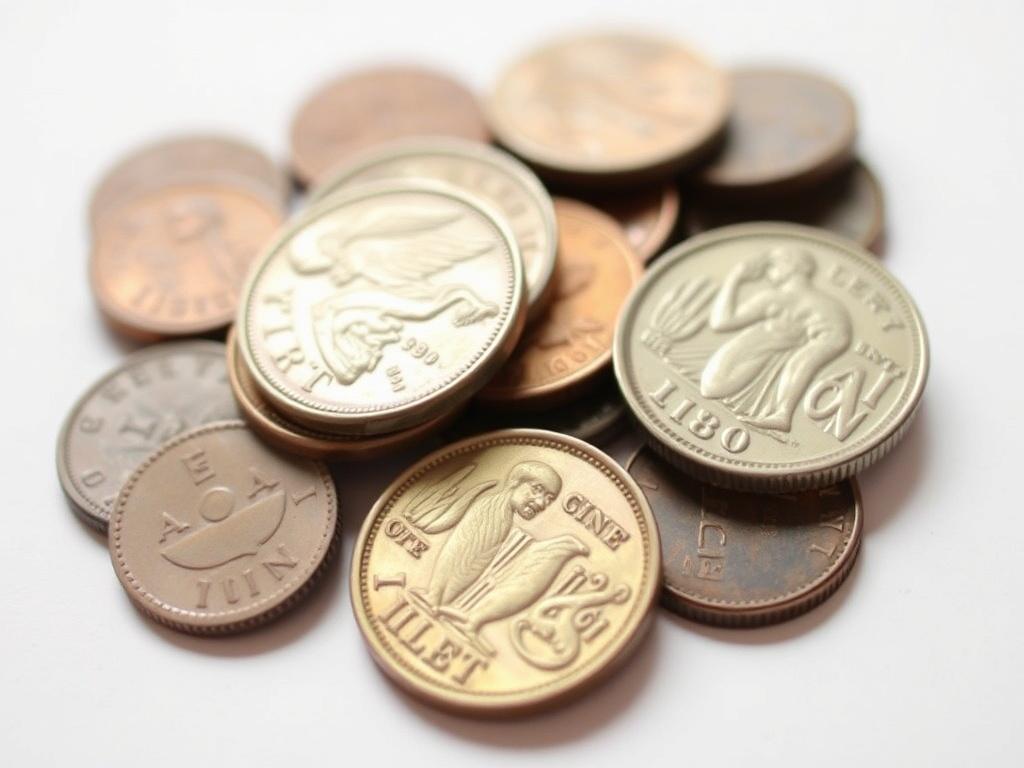
Essential items to record — printable checklist
| Item | Why it matters |
|---|---|
| Date | Primary determinant of rarity and series. |
| Mint mark | Tells where the coin was struck; some mint marks are rare. |
| Denomination and country | Establishes market and reference guides to consult. |
| Weight and diameter | Helps detect altered or counterfeit coins. |
| Composition or metal | Bullion content affects minimum value. |
| Obverse/reverse notes | Any unusual marks, toning, or die markers. |
| Photographs | Document condition and help with remote appraisals. |
| Provenance | Previous ownership, purchase receipts, or auction lots add trust. |
Tools that make this easier: a jeweler’s loupe (10x), a simple digital scale (0.01 g accuracy helps), calipers for diameter, and a lighted magnifier. None of these are expensive, and they will pay for themselves when you can quickly rule out fakes or mismatches.
Authentication: spotting fakes and altered coins
Counterfeits exist at every level of the market, from crude imitations to high‑quality modern forgeries. Authentication is both a visual and a physical process. Start with non‑destructive checks and escalate to professional help for anything that could be valuable.
Key signs of fraud include odd weight or diameter, magnetism where none should be, surface bubbling or seam marks (common in cast fakes), incorrect lettering or fonts, and suspiciously uniform wear. Altered coins—dates filed, mint marks added—are a different problem; they can be hard to spot without a careful comparison to genuine examples.
Non‑destructive tests and checks
- Weigh the coin and compare to reference specifications for that issue.
- Measure diameter and thickness with calipers.
- Test magnetism with a small magnet (but remember some modern alloys are non‑magnetic).
- Inspect edge for seams or casting marks.
- Compare details — lettering, portrait profiles, and known die markers — with high‑quality reference photos.
- For suspicious or high‑value coins, use a reputable third‑party authentication service.
When in doubt, send the coin to a professional. For high‑value items, the small cost of grading and authentication is often far less than the difference between a sale at a discount and a sale at market price.
Researching prices: where to look and how to interpret listings
Price guides and online tools are indispensable, but they serve different purposes. A printed price guide gives a snapshot; auction records show what collectors actually paid. Marketplaces list asking prices, which are often optimistic. Treat each source as one piece of the puzzle.
Use multiple sources: established price guides (for U.S. coins, the Red Book is a classic reference), online price guides (PCGS, NGC), auction archives (Heritage, Stack’s Bowers), CoinArchives for older international sales, and marketplaces like eBay to see realized prices for similar condition coins. Look for “sold” or “completed” listings; asking prices tell you less.
Comparing market resources — pros and cons
| Resource | Strengths | Limitations |
|---|---|---|
| PCGS / NGC price guides | Good for graded coins and current market trends; reliable references | Focus on slabbed coins; may not reflect raw market variability |
| Auction archives (Heritage, Stack’s) | Realized prices for high‑end and rare coins; detailed lot descriptions | Skewed toward higher value material; not comprehensive for common dates |
| Printed guides (Red Book, Krause) | Great starting point, especially for older U.S. and world coins | Annual update cycle; retail‑oriented and sometimes conservative |
| eBay / marketplace sold listings | Shows what real buyers paid for similar raw coins | Quality varies; need to match grade closely and watch for misdescriptions |
Interpretation matters. A guide price for an MS‑65 coin is not the price for an MS‑60 example. Likewise, an auction record for a coin with exceptional provenance might not translate to an ordinary specimen. Always compare like with like.
To slab or not to slab: costs, benefits, and timing
For some coins, professional encapsulation is a clear upgrade: it certifies authenticity, assigns a grade, and makes the coin more attractive to collectors. For others—common dates or low‑value pieces—the cost and wait may not be justified.
Consider submitting coins for grading if they are: potentially high in value, rare or problematic (errors or varieties), part of a specialized collection, or you plan to sell to a collector audience that prefers certified coins. If a coin is unlikely to bring much above its metal or common‑date price, keep it raw and sell locally or as part of a lot.
Practical note on grading submissions
Grading services have tiers and turnaround times. Membership in the grading service can give lower fees or special submission routes. Take good photos for the submission paperwork, and read the service’s requirements carefully to avoid delays or surprises.
How to photograph and document coins for appraisal or sale
Good photographs change the whole dynamic of an online sale or remote appraisal. Clear, well‑lit images reduce back‑and‑forth and convey confidence. Use natural light when possible, a neutral background, and steady mounting for the camera. Capture obverse, reverse, edge, and close‑ups of the date and mint mark.
Include a ruler or another object for scale only when necessary; most collectors prefer standard coin capsules or known coin sizes rather than arbitrary objects. Create a simple inventory that lists each coin’s identifying information and images. That inventory becomes your sales sheet, insurance record, or submission document for grading.
Where to sell and how to get the best price
Deciding where to sell depends on how much effort you want to invest, how quickly you need cash, and your tolerance for fees and shipping risk. Options include local coin dealers, coin shows, auctions (live or online), consignment, and private sales through collector networks.
Local dealers give speed and low hassle but often pay wholesale prices. Auctions and consignment can yield the highest prices for rare, attractive coins, but they charge commissions and take time. Online marketplaces like eBay let you reach a broad audience but require careful listing, good photos, and safe shipping practices.
Tips to maximize sale value
- Research similar sold items to set realistic expectations.
- Get multiple offers from reputable dealers before selling—one offer is rarely the best.
- Provide provenance, high‑quality photos, and condition notes to increase buyer confidence.
- Consider grading high‑value pieces before sale; slabbed coins frequently fetch higher prices.
- Use an auction house for rare, well‑documented coins if you want top market exposure.
Proper storage and conservation
If you’re not selling immediately, proper storage preserves value. Avoid PVC flips, household humidity, and direct sunlight. Use inert holders: archival mylar flips, airtight capsules for modern coins, or acid‑free envelopes. Keep coins in a stable, moderate climate and minimize handling. When you must touch a coin, handle by the edge and avoid fingerprints.
Toning and patina are part of a coin’s character; do not attempt to clean a coin to “improve” its look. Cleaning usually damages surfaces and reduces value. If a coin has active corrosion (green spots on copper, for example) consult a conservator or an experienced dealer before taking any action.
Common mistakes to avoid
People make similar errors when they first start checking coin values. Avoid these pitfalls to save time and money.
- Cleaning coins to increase value — cleaning almost always lowers price.
- Relying on one source for pricing — check multiple guides and actual sales.
- Assuming a fancy-looking coin is valuable — attractive toning helps, but correct attribution and grade matter most.
- Accepting the first offer without comparing — get several opinions for anything above trivial value.
- Shipping without insurance or careful packaging — many coins are lost or damaged in careless transit.
Quick, practical checklist: How to check a coin’s value right now
- Identify the coin: country, denomination, date, mint mark, metal.
- Record condition: take photographs and note wear, scratches, or toning.
- Weigh and measure to confirm specs and rule out obvious fakes.
- Compare to multiple references: printed guides, PCGS/NGC, auction archives, eBay sold listings.
- If the coin seems valuable or unusual, seek professional authentication or grading.
- Get multiple offers if you intend to sell; check both dealer and auction routes.
- Store or ship properly: inert holders, padded packaging, and insured delivery when necessary.
Useful resources and where to learn more
Below are reliable starting points to expand your knowledge and check values. These organizations and platforms are widely used by collectors and professionals.
- PCGS (Professional Coin Grading Service) — grading, price guides, and population data.
- NGC (Numismatic Guaranty Corporation) — grading, price guide, and educational resources.
- A Guide Book of United States Coins (the “Red Book”) — accessible, authoritative for U.S. coins.
- Krause Publications / Standard Catalog of World Coins — detailed references for world issues.
- Heritage Auctions / Stack’s Bowers — auction archives to check realized prices for rarities.
- CoinArchives.com — historical auction data for many world and ancient issues.
- eBay completed listings — practical insight into what buyers actually paid for similar coins.
- Local coin clubs and the American Numismatic Association — community knowledge, tangible help, and education.
Final thoughts
Checking the value of old coins is part detective work, part market analysis, and part patience. A careful approach — accurate identification, sensible use of tools, comparison across multiple price sources, and respect for proper conservation — will guide you to a trustworthy estimate. When a coin turns out to be rare or potentially valuable, professional authentication and a thoughtful selling strategy will maximize what it brings.
Above all, take your time. Rare finds don’t need to be rushed. Document, research, and consult. Even if the coin turns out to be modest in monetary value, the process of learning about it will make the discovery worthwhile.